
The Science Behind Diamond Cutting Tools

Precision Through Understanding
Diamond tool performance depends on far more than grade selection. Success requires integration of material science, geometric optimization, and manufacturing precision each element calibrated for specific applications.

Diamond Architecture
The industry categorizes diamond tooling by grain size and binder type, as if these were the only variables that matter. Our experience reveals a more complex reality:
Crystallographic Optimization Every diamond particle has directional properties that affect cutting performance. Random orientation standard in most tools means random results. We control particle placement to match material requirements, particularly critical in directional composites and filled polymers.
- Thermal management for high-temperature polymers
- Chemical compatibility with reactive materials
- Wear characteristics matched to application duration
- Particle retention in aggressive cutting environments
Edge Architecture: Where Physics Meets Practice
Cutting edges that measure identically can perform completely differently. The distinctions exist at scales most shops can’t inspect and in features handbooks don’t discuss:
Micro-Geometry Matters
- Edge preparation for virgin PEEK differs radically from glass-filled variants
- Carbon fiber requires specific radius-to-clearance ratios to prevent delamination
- Ceramic cutting depends on controlled micro-fracture, not shearing
- Each material family has optimal geometry we’ve defined through experience
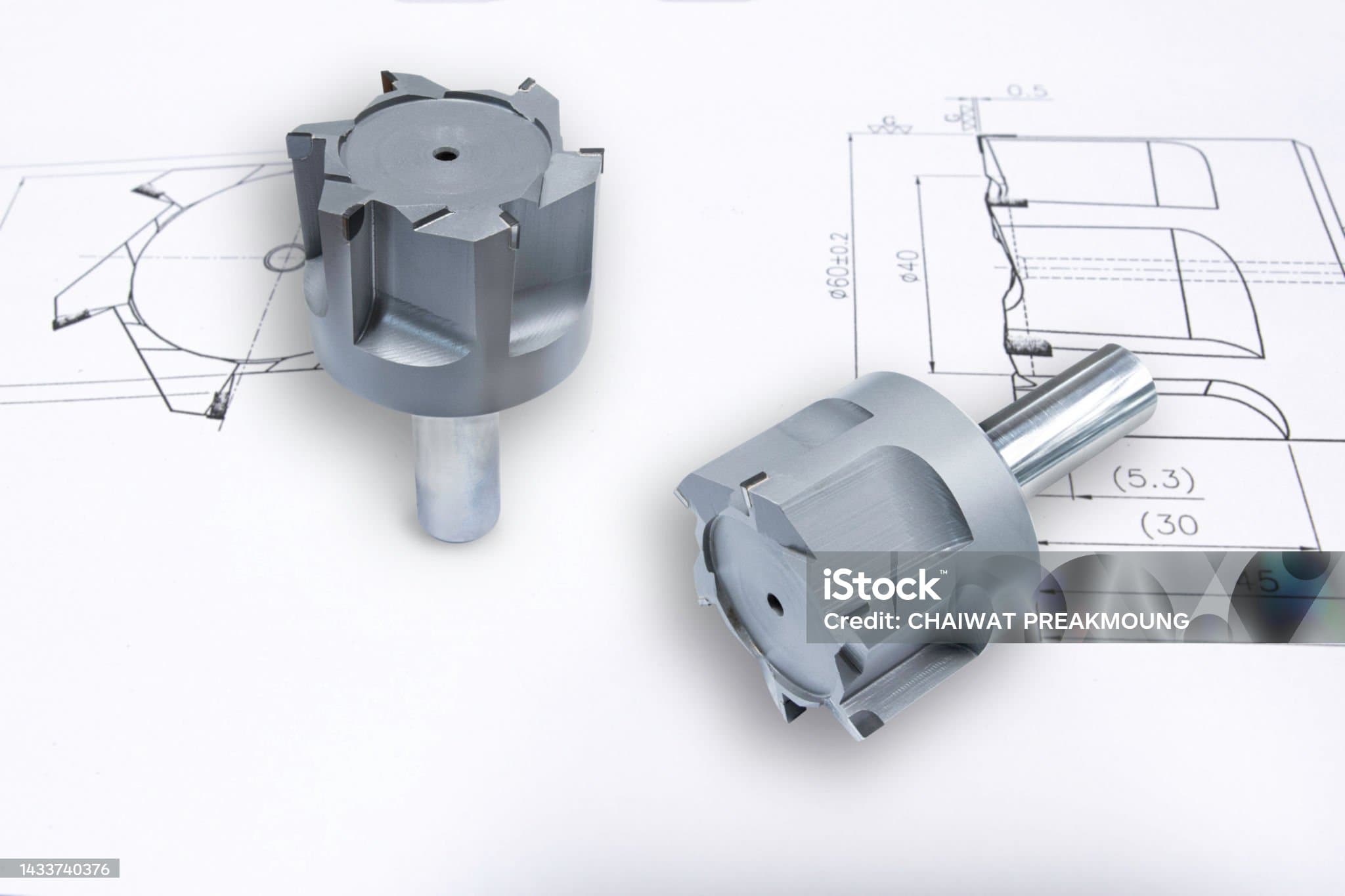
Thermal Dynamics Through Design Heat generation and dissipation determine tool life and part quality. Our geometries actively manage thermal conditions:
- Clearance angles that prevent heat concentration in polymers
- Chip thickness optimization for thermal control
- Surface preparations that reduce friction without sacrificing strength
Material-Specific Solutions
Generic “plastic” or “composite” geometries ignore the vast differences within material families. Our approach recognizes these distinctions:
Generic “plastic” or “composite” geometries ignore the vast differences within material families. Our approach recognizes these distinctions:
Advanced Polymers
- Torlon behaves differently above and below glass transition
- Vespel's molecular structure requires unique edge interaction
- Ultem's thermal sensitivity demands specific clearance strategies
- Each filled variant needs adjusted geometry for filler management
The Systematic Approach
Every QRTZ tool represents systematic optimization:
- Application and material analysis at molecular and structural levels
- Failure mode mapping from thousands of applications
- Geometric design based on actual cutting mechanics
- Validation through progressive refinement
- Continuous improvement from field performance
Technology Resources & Support
To support engineering and purchasing teams in making informed tooling decisions, QRTZ offers a wealth of technical resources including white papers, application notes, product catalogs, and machining guides. Our technical support team is also available to provide personalized consultation and troubleshooting assistance.
Discover how QRTZ technology can transform your machining operations with unmatched precision, longevity, and efficiency.